My Year of Vibe-Coding Experiments
Apr 6, 2026
Like many others, over the past year I started diving into vibe coding but I decided to experiment consciously with various AI-powered coding tools to see what works, what doesn't, and where the future might be heading. Note that I am not a coder so all this is a game changer for me.
Let me share my ups and downs and learnings from testing out different platforms in chronological order from :
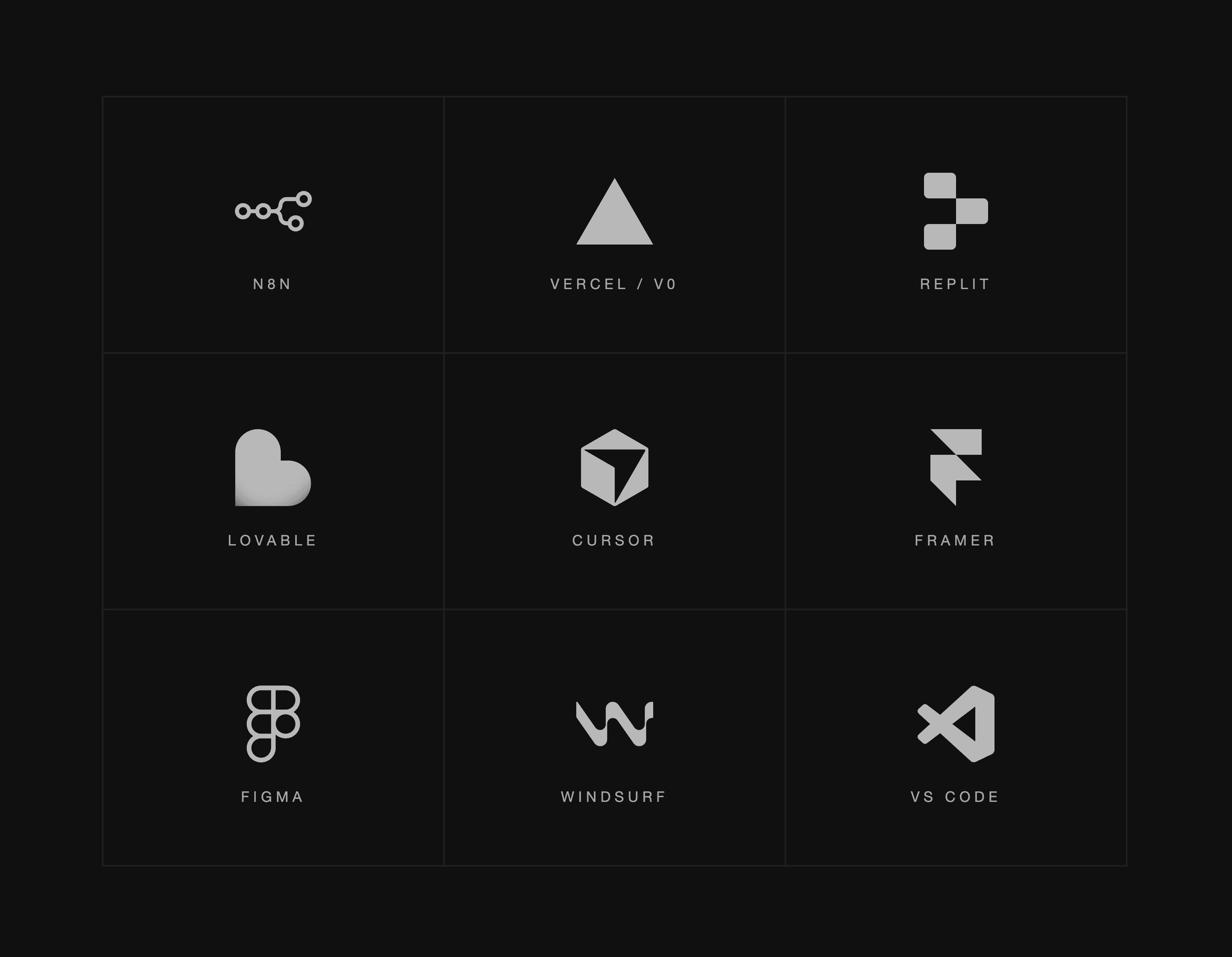
N8N: Weird but I started from here more than a year ago thinking it would be the ultimate agent-creation tool. While it's powerful for automation workflows, I quickly realized it's not truly agentic – it still requires solid coding knowledge to set up complex automations. Great for structured processes, but not the "set it and forget it" AI I initially hoped for.
Vercel V0: This was my first foray into AI-generated UI. The results were kind of promising, but I hit a wall when it came to design finesse. At the time, the tool didn't have the design chops to match my standards. It's improved since, but it made me aware that AI design tools need more than just code generation – they need a design sense – which they are developing rapidly.
Replit: In the early days the output and progress were clunky. However, the concept of having a companion app is revolutionary. It's gotten better since then with a design canvas feature which is in its infancy. Worth trying.
Lovable: The friendly interface made it easier to get results quickly. The generous daily quota meant I could experiment freely without constantly hitting limits. It felt like the tool understood what I wanted faster than other platforms. A standout in terms of user experience.
Cursor: I committed to a month of the pro version. The GitHub integration was a paradigm shift for a designer – the logic behind it is steep for me but makes total sense once you get it. Using OpenAI APIs directly gave me granular control and I finally appreciated the nuances of prompt engineering.
Framer Workshop: A very well-positioned and integrated micro vibe-coding tool within a web design and deployment platform. It benefits from being inside a much loved tool. Still can suffer from losing focus in multiple iterations within the same context window.
Figma Make: Absolutely a winner for designers with existing subscriptions since it also occupies the same mind space as your design tool. But it does not benefit enough from being the sister of Figma Design just yet. Expect some inconsistent output and don't expect it to grab your Figma context naturally.
Windsurf: I started using it for the "Bring your own tokens" feature. It felt more polished than many other IDEs, and having control over my API usage was liberating. However, I still found myself wishing for more seamless integration with my existing workflows.
VS Code with MCPs: This was the most technically challenging. Model Context Protocols sounded amazing on paper, but in practice, they're complicated and not ready for prime time yet - or going extinct already. Using design systems properly still requires too many parameters – the AI is powerful but needs more context to truly understand design intent.
So, what have I learned from this year-long experiment?
AI coding and design tools are maturing, but they're not magic: They excel at accelerating certain tasks but still require human oversight, especially for complex or nuanced work. Without understanding some basics of coding, the journey is a maze. (What the hell is regex?)
Developer Experience matters more than ever: Tools that prioritize ease of use and intuitive interfaces win out. Lovable's approach showed me that friendliness can be as important as power. (I never want to read another API doc)
Cost and limits are real constraints: Whether it's API quotas or subscription tiers, you need to factor in the economics of AI usage into your workflow. APIs are very affordable for creating AI-enabled products but not for vibe coding. (I'm still using the USD 12 OpenAI tokens I bought months ago)
Integration is key: The tools that play well with existing ecosystems like Cursor's GitHub integration provide the most value. (Integrations are becoming more agent-friendly but still require technical knowledge)
We're still in the early days for design flows: While impressive, these tools aren't replacing skilled designers anytime soon. MCP connections for Figma require too much knowledge and tinkering. (It is just a matter of time or a clever startup to solve this. I'll be soon trying Noon.
I have tried Paper, Pencil and other derivatives of creatively named SaaS companies but nothing specific to report here yet.
I'm still optimistic and excited about the potential of AI in coding and design, but I'm also cautious until these tools can truly understand context, design systems and principles, and intent deeply.
You can see some of the trials in the Playground section.